Zen Online is a collaborative project dedicated to making authentic Zen instruction accessible to English speakers. It was started by Jisho (Kenichi) Matsumoto, a Zen master living in Tokyo, and Madoka Chase Onizuka, a Zen practitioner with professional experience as an interpreter and translator.
Jisho-san teaches Dharma as a lay person, unaffiliated with any organization. His satori is recognized by his teacher, Inoue Kando Roshi, the Dharma heir to Inoue Gien Roshi. Further details are in the profiles below.
Inoue Gien Roshi
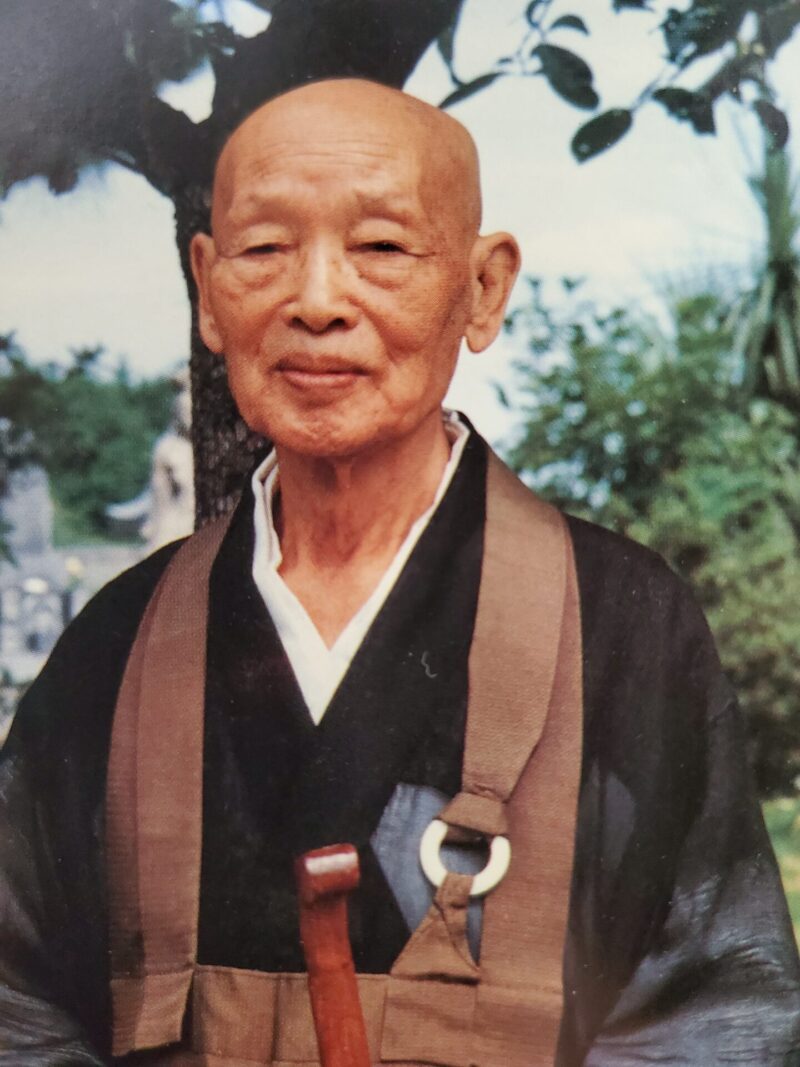
Inoue Gien Roshi was born in Hiroshima Prefecture in 1894. He attained satori in 1919 at the age of twenty-five, inheriting the Dharma discovered by the Buddha. In 1924, he became abbot of Ryusenji Temple in Hamamatsu. From 1925, he served as shike (Zen teaching master) at several Soto Zen training temples, including Kokutaiji Temple, Kahaisai Temple, Nitaiji Temple, and Toyama Nunnery. He also served as president of the Soto Sect Teachers' Association.
In 1970, Gien Roshi was invited to the New York Zen Center to teach zazen, and he traveled again to the US and France in 1971. In 1984, he appeared on Japanese national television in NHK’s “Shukyo no Jikan” (“Religion Hour”). His light-hearted and simple explanations of what most people consider difficult Zen teachings and clear explanations of the Dharma caused a sensation. Many of his teisho (when Zen masters point to Truth to gathered disciples or students) have been compiled in Japanese.
Gien Roshi was known as a Zen master of great calibre, as he taught with profound clarity. He conveyed the true essence of Zen in colloquial terms, without using difficult Buddhist terminology, and both monks and laypeople from throughout Japan went to learn from him. He died in 1981 at age 88.
A glimpse of Gien Roshi’s teachings can be found in two books recently published in English:
1) A Blueprint of Enlightenment: A Contemporary Commentary on Dōgen Zenji’s Gakudō Yōjinshū “Guidelines for Studying the Way.
2) The Formless Record of the Transmission of Illumination: A Contemporary Commentary on Keizan Zenji's Denkoroku
Inoue Kando Roshi
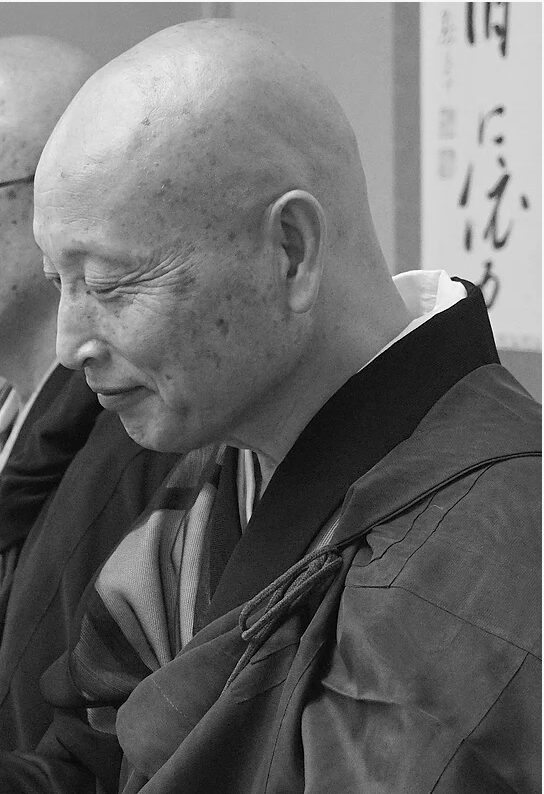
Born in 1944 in Shizuoka Prefecture, Japan, he is the fifth son of Inoue Gien Roshi. From a young age, Kando Roshi was often in the presence of Gien Roshi and monks in training. Kando Roshi himself ordained at the age of 10. When he was 14, he began training at Hosshinji under Harada Sogaku Roshi and Harada Sessui Roshi. He enlightened at age 16 and inherited the Dharma discovered by the Buddha. Later, he received inka shomei from Gien Roshi, who designated him as his Dharma heir. At age 20, he began training at Daihonzan Sojiji Temple. He completed his training at age 25, and was appointed junshike (one qualified to guide ascetic monks). He has been teaching throughout Japan since then.
Kando Roshi was abbot of Shorinji Temple in Shizuoka Prefecture from 1971 to 2015. He now dedicates his time to conveying the true Dharma far and wide. He teaches the true essence of Zen in colloquial terms, without using difficult Buddhist terminology, and both monks and laypeople throughout Japan go to learn from him.
He has one English publication, a booklet entitled, The Fundamental Premise of Zen Practice: Truth, Enlightenment, and Zazen.
Information about the book is available here: <https://inouekandoroshi.wixsite.com/english>
Matsumoto Jisho (Kenichi)
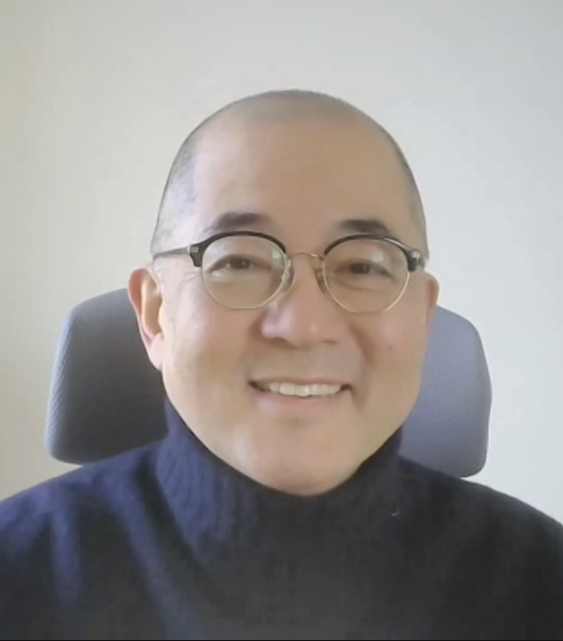
Jisho Matsumoto is a Zen master living in Tokyo. Before encountering Zen, he tried various meditation techniques, healing practices, therapies and other methods in order to resolve anxiety in general. At one point, he realized that his anxiety stemmed from fear of death and not knowing what would happen after death. He then began searching for Truth and satori. Although he had certain experiences and insights through various practices, they satisfied him only temporarily, and he would then return to searching for Truth.
After exhausting everything he could think of, one day Jisho-san encountered a book by Inoue Gien Roshi. He could see that Zen would put an end to his quest, and he began practicing diligently under Inoue Kando Roshi's instruction and officially became his disciple by receiving lay ordination (layperson tokudo).
Jisho-san sat whenever and wherever possible until one night, with a "tick!" sound, "that which is already clear" (Truth) was revealed (afterwards, he knew that the "tick!" was the sound of the second hand of his clock). Kando Roshi* recognizes Jisho-san's satori, saying that "his eyes are clearly open." The name, Jisho, means "one who verified Truth for himself."
In his teachings, Matsumoto considers the habits and traits of participants in his zazenkai and aims to supports them to do zazen correctly as quickly and efficiently as possible.
(*Kando Roshi would like to add that anyone with a complaint regarding Jisho-san teaching Dharma as a layperson may contact him directly.)
Onizuka Chase Madoka
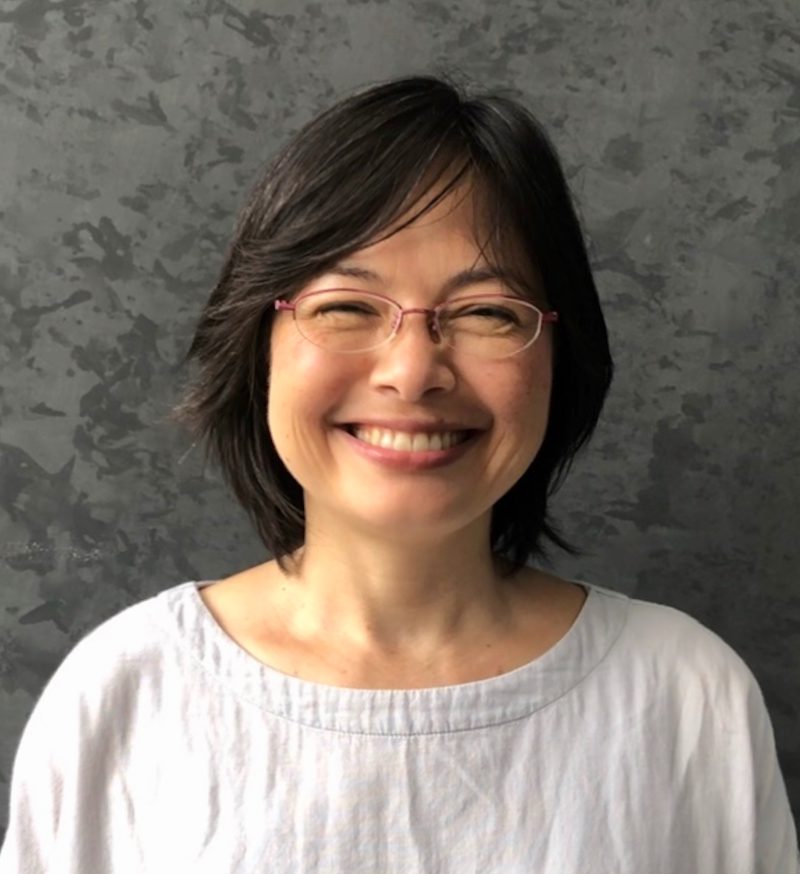
Madoka has been practicing zazen under the instruction of Jisho Matsumoto and Inoue Kando Roshi since 2015. She is now working with Jisho-san to provide zazen instruction in English at Zen Online.
She has worked in politics, education, human rights and environmental advocacy, and yoga therapy. She began meditation in 1996 as a practice to develop compassion and peace of mind. Her interest in enlightenment was sparked when a meditation teacher defined it as "liberation from suffering." She studied yoga, meditation, and Zen under several teachers, thinking they were all different paths to the same summit. But after attending Jisho-san's zazenkai, she realized that Zen was radically different from anything she had heard before. She is now certain of her path.
Madoka knows from personal experience many of the mental blocks that Zen practitioners often trip over, and how easy it can be to confuse Zen with meditation and other spiritual practices. These experiences and her skills as an interpreter put her in a good position to convey Jisho-san's instructions in ways that help English speakers avoid pitfalls. She is also able to give recommendations to Jisho-san regarding the kinds of explanations that are more effective for English speakers. She is happy to be a linguistic bridge to assist English speakers learn to sit and become free from the illusion of self.
